
%20detail%204.jpg)

-web.jpg)


.png)


-web.jpg)

























.JPG)









OPENSEA: Greater Taipei Biennial of Contemporary Arts
Taipei
Type
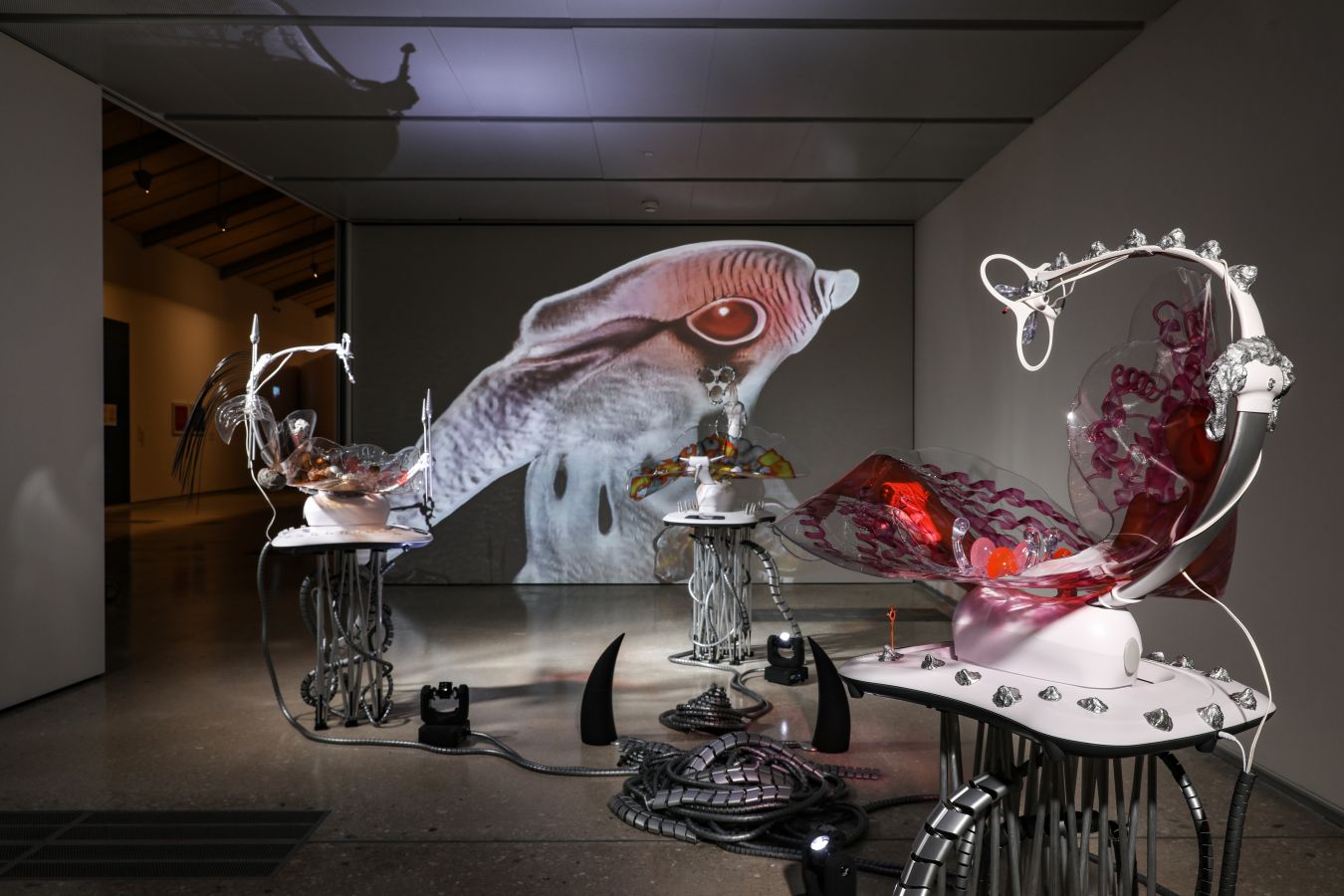
The theme of 2022 Greater Taipei Biennial of Contemporary Arts-"Opensea" focused on the relationship between the data environment and users. When data is used as a medium, how artists use data to generate special shapes and respond to the ecosystem of the data environment, and use diverse technologies to make invisible things can be sensed.
The 2022 Greater Taipei Contemporary Art Biennale is titled "Opensea". The multiple meanings of the word "Opensea" reflect the value of this biennale: if it is regarded as OpenSea, it refers to NFT (Non-Fungible Tokens), Non-Fungible Tokens online trading market, a "decentralized" art publishing platform; if it is regarded as High Seas or International water, it refers to the waters beyond the territorial sea, which means that it does not belong to any sovereign jurisdiction. The open world of the people. Such an imagining is that the exhibition "Into the Open Sea" hopes to bring artists, art critics, all characters in the art world and viewers to share the free atmosphere of art exhibitions.
The special block-type exhibition venue of the Biennale is also responding to the decentralized nature of the web3 era. Each piece of work is presentws a special world view in a different block.
Greater Taipei Biennial of Contemporary Art
Log Into Our Sea
"Log Into Our Sea" is the theme of Greater Taipei Biennial of Contemporary Art 2022 ("the Biennial"). With such concept, we aim to invite viewers to sail towards the unknown Gong-hai with us in Our Museum[1].
The phrase Gong-hai, or "Our Sea", in the title of this year’s biennial, has multiple meanings: On one hand, the phrase can be used to refer to the non-fungible token marketplace, OpenSea, where certificates are assigned to digital works in the form of NFT. A wide variety of works are "uploaded" to such a "decentralised" platform, including but not limited to artworks, music, images, games and other collectibles. The phrase, on the other hand, can also refer to the high seas or international waters, which means waters that are "open to all nations," and "no State may validly purport to subject any part of them to its sovereignty".[2] The varied concepts derived from Gong-hai are what the Biennial aims to manifest for its viewers as the phrase creates an environment that allows viewers freely enjoy the artworks.
To "log into" such "sea", one needs to first input their "user ID". It is a code granting access to the infinite world that might appear to be a virtual place, a physical exhibition venue, or an imagined hybrid space. Users will meet different people in "Our Sea", such as curators, artists, art critics, museum guides, scholars, researchers, faculty and students of the University and viewers, while everyone is given a neutral username to remove the connotation of their identity and therefore democratise how art is interpreted. When users log into this world, they can enjoy the freedom to "decrypt" and "encrypt" at their will. They can interpret artworks in their own ways, give new meanings to these works, or even hold opposite views to the artists.
Sailing in "Our Sea", viewers will meet 28 artists coming from Taiwan, the United Kingdom, Germany, South Korea, the United States, Colombia and Estonia, as well as artists in exile who are from Russia and the NFT team formed by artists, collectors and researchers. Viewers can "stop by" three different venues (Our Museum, NTUA Art Village and 9 Art Space) to appreciate different formats of art, such as videos, documentaries, installations and interactive devices. In the Biennial, the exhibiting works focus on the use of new media and technologies and these works also intend to remind viewers something – While we are enjoying the convenience brought by new technologies, we need to also pay attention to related controversies and crises that may appear.
"Log Into Our Sea" demonstrates the diversity of art, creating an infinite multiverse where users can travel around in its different dimensions and enjoy themselves in the sea of art once they input a string of characters and press the "enter" key to log in.
The Sea of Freedom: A Virtual Art Museum
The Sea of Freedom is a website project that depicts the images of the Biennial and those of the (art) museum. This project embeds moving and static visual creations related to Our Museum through an immersive design. By simply gliding their fingers on a screen, visitors can enter a virtual art museum, click to view the orderless three-dimensional objects and browse for more possibilities outside the Biennial.
Wander into Our Sea: An Augmented Reality (AR) App
Wake your phone up and "log into" the Biennial to "wander into our sea". The project integrates the five centeres of Our Museum: the Historic Object Conservation Research Center, the Innovation Center for Art and Technology, the Center for Sound Art and Acoustics Research, the Center for Physical Arts Experimentation and the Research Center for Intangible Cultural Heritage. Through environment-tracking AR technology built in the smartphone app, visitors can explore the tasks and findings of each center and freely wander in the physical exhibition venues with the help of the app. By interacting with the exhibition venues with the swipe of their fingers, visitors will be enjoying a participatory viewing experience during their visits.
The Experimental Continuing Education Project - Contemporary Art X Performance X Children's Art
Led by Our Museum, the "Experimental Continuing Education Project" is the first of its kind which is especially planned for the Biennial. The project is an experiment that combines contemporary art, performance and children's art. Through three creative projects which include Does the Dog Know that It's On the Camera?, CHECK IT! CHECK IT! 2022 and One-minute Pantomime, the experimental project aims to build a bridge between artwork and audiences and dispel the assumption that contemporary art is difficult to understand. It is part of the museum's continued efforts on publicity which it has been focusing on for years. In addition to welcoming the general public, the Biennial is also dedicated to promoting the exhibit to children and family visitors, opening up opportunities for Our Museum to interact with different visitor groups.
[1] The name of the exhibition venue is "Our Museum", which has an intertextuality with the phrase "Our Sea" in the title of this year's biennial. Together, they present an invitation for viewers to "Log Into Our Sea".
[2] According to Convention on the High Seas published in 1958: "The term 'high seas' means all parts of the sea that are not included in the territorial sea or in the internal waters of a State."
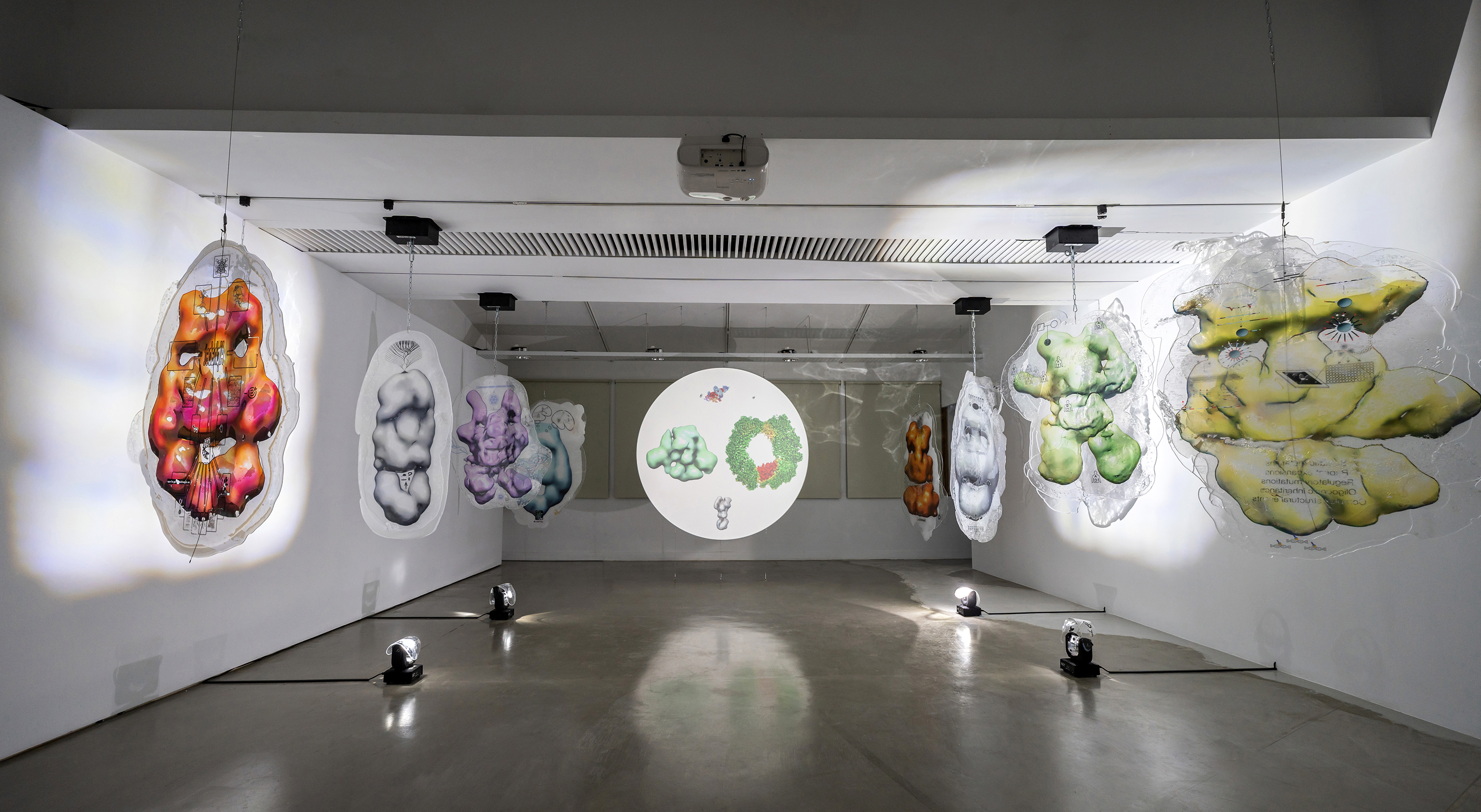
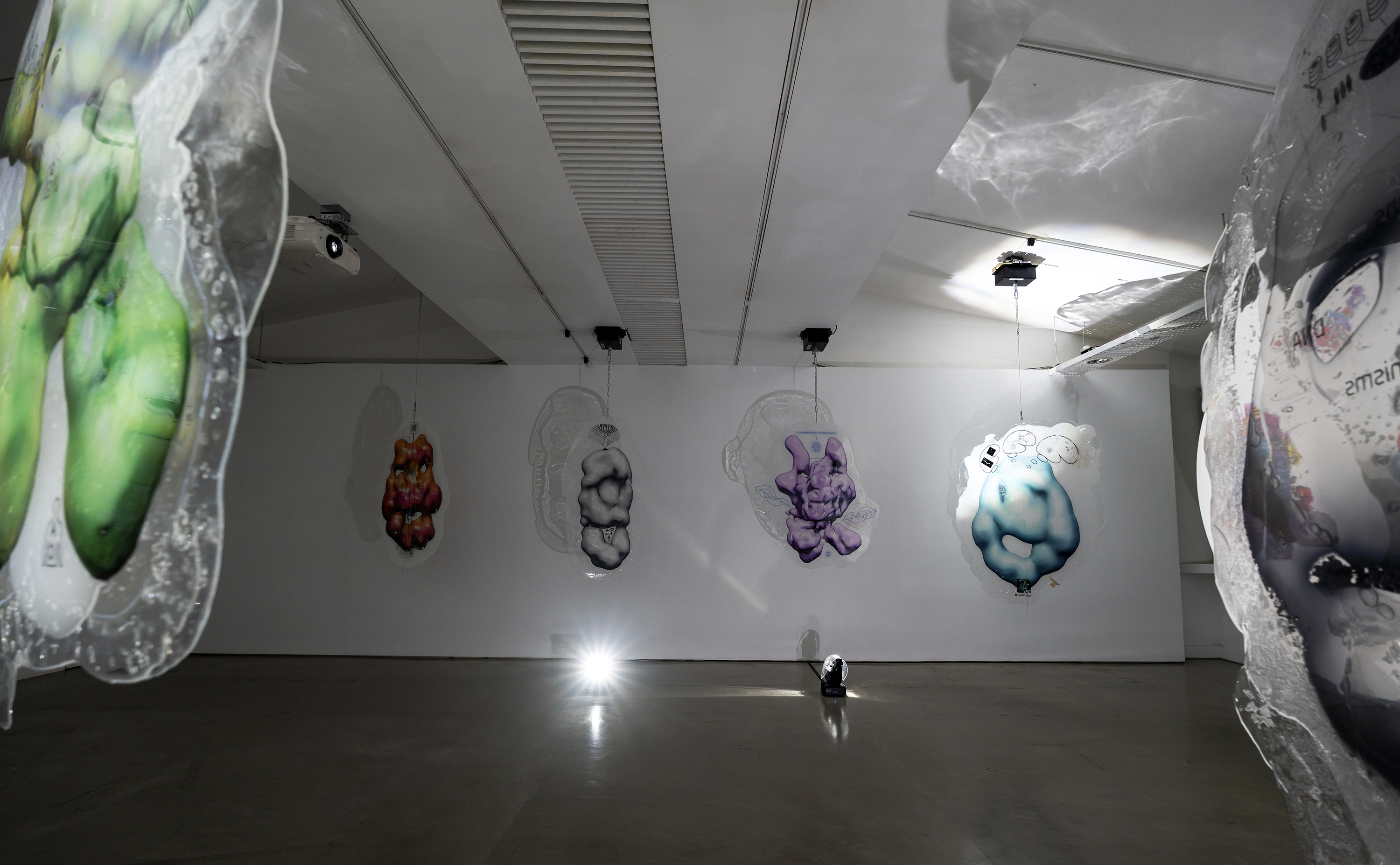
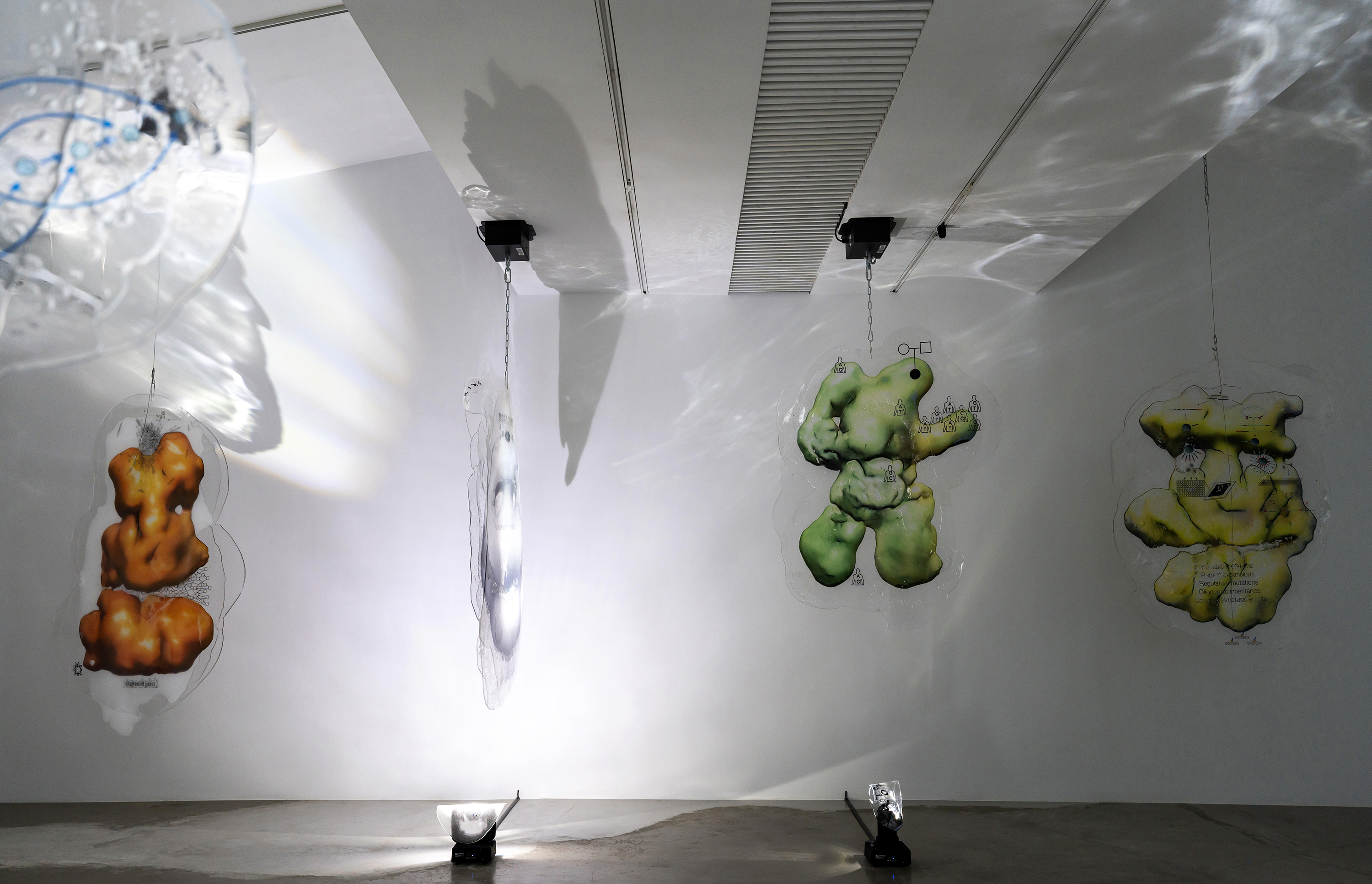
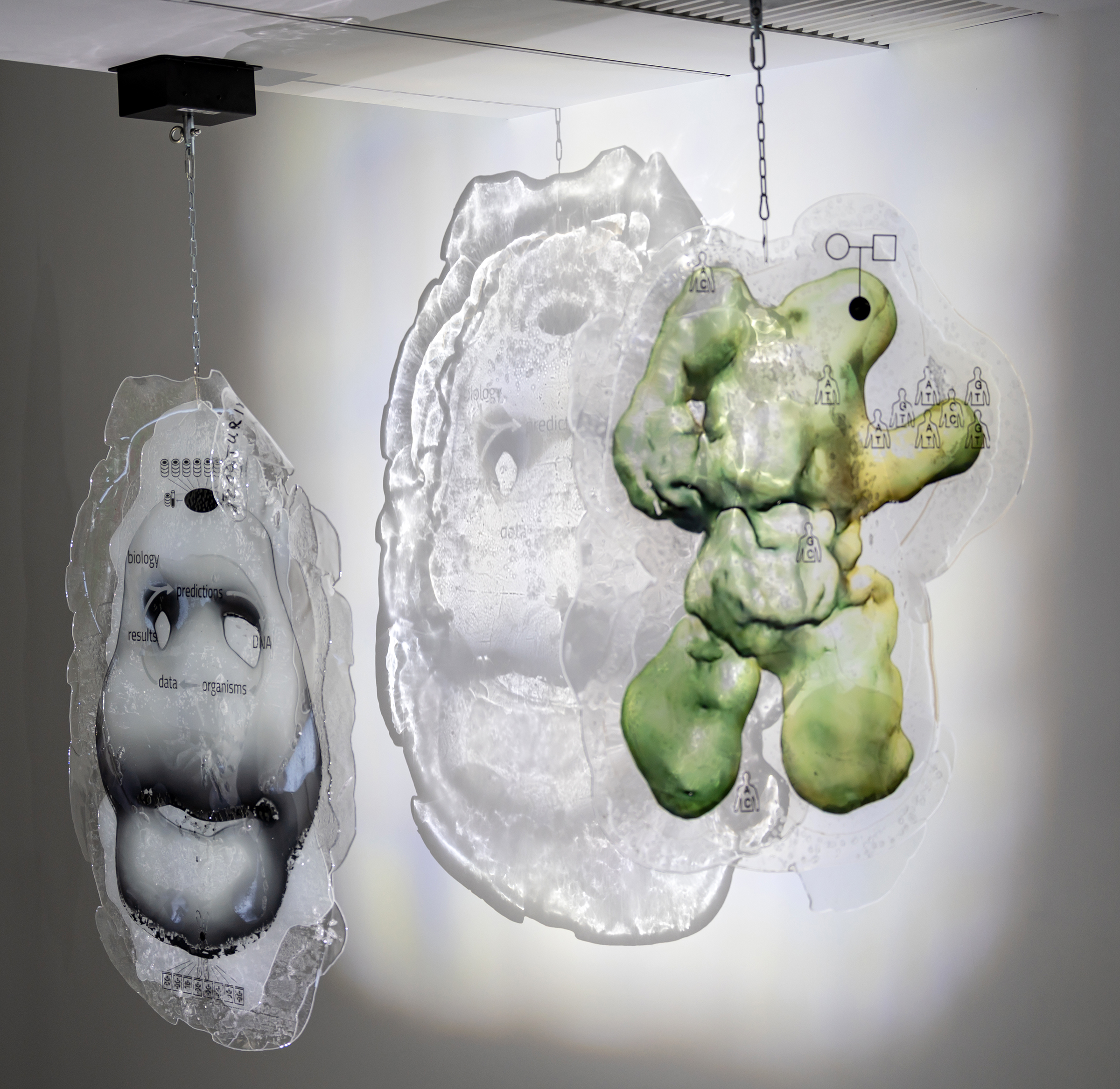
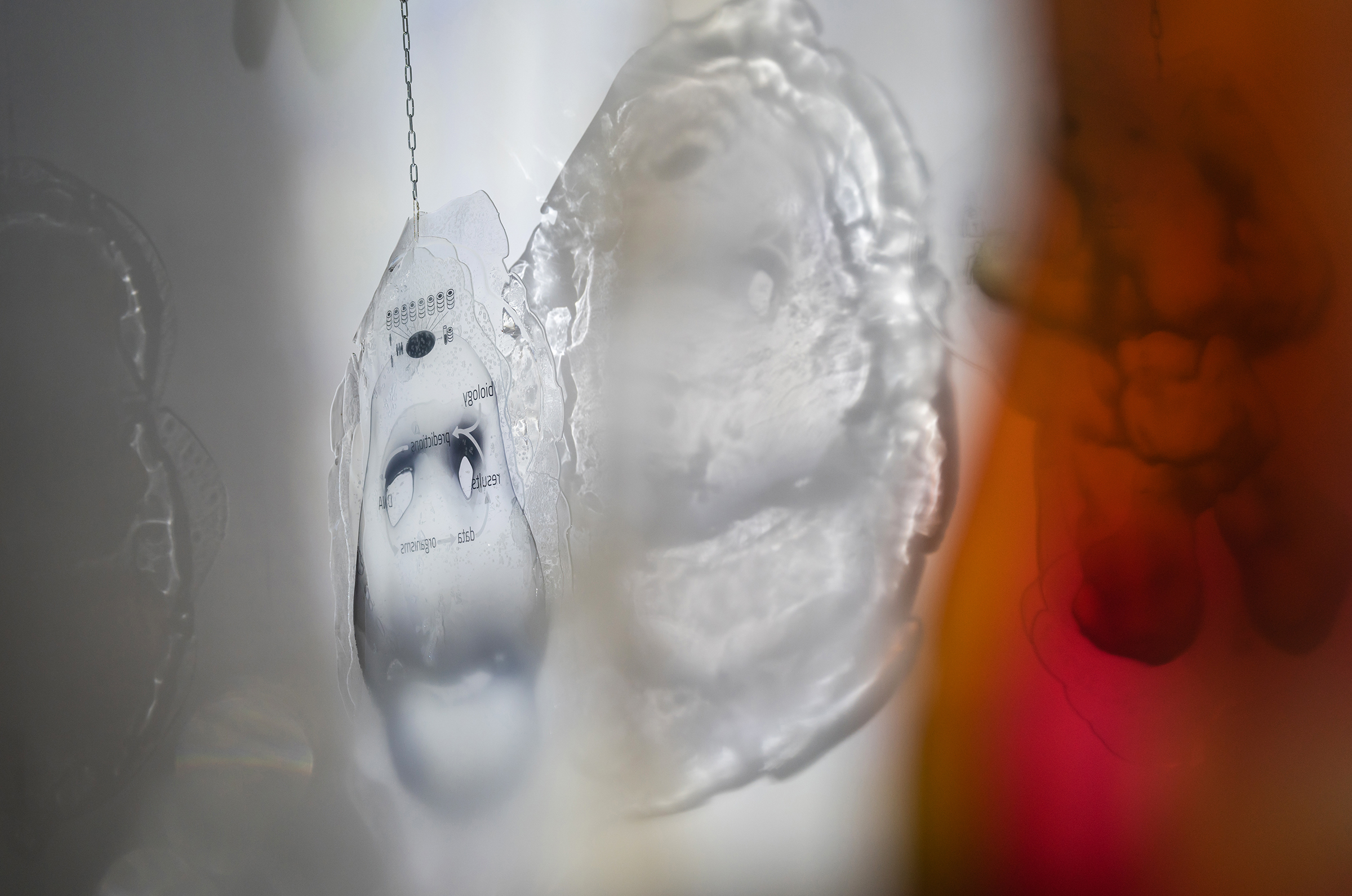
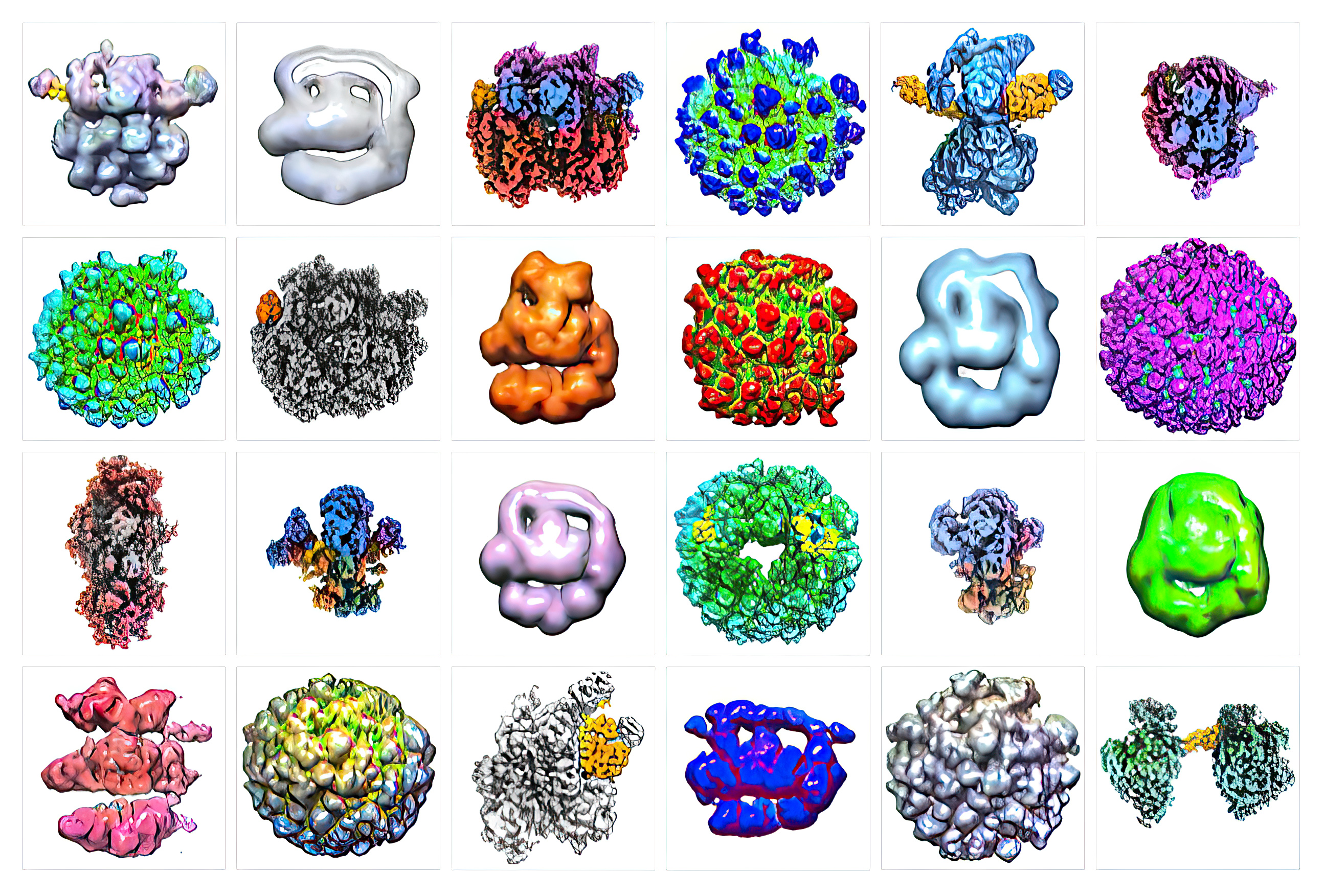
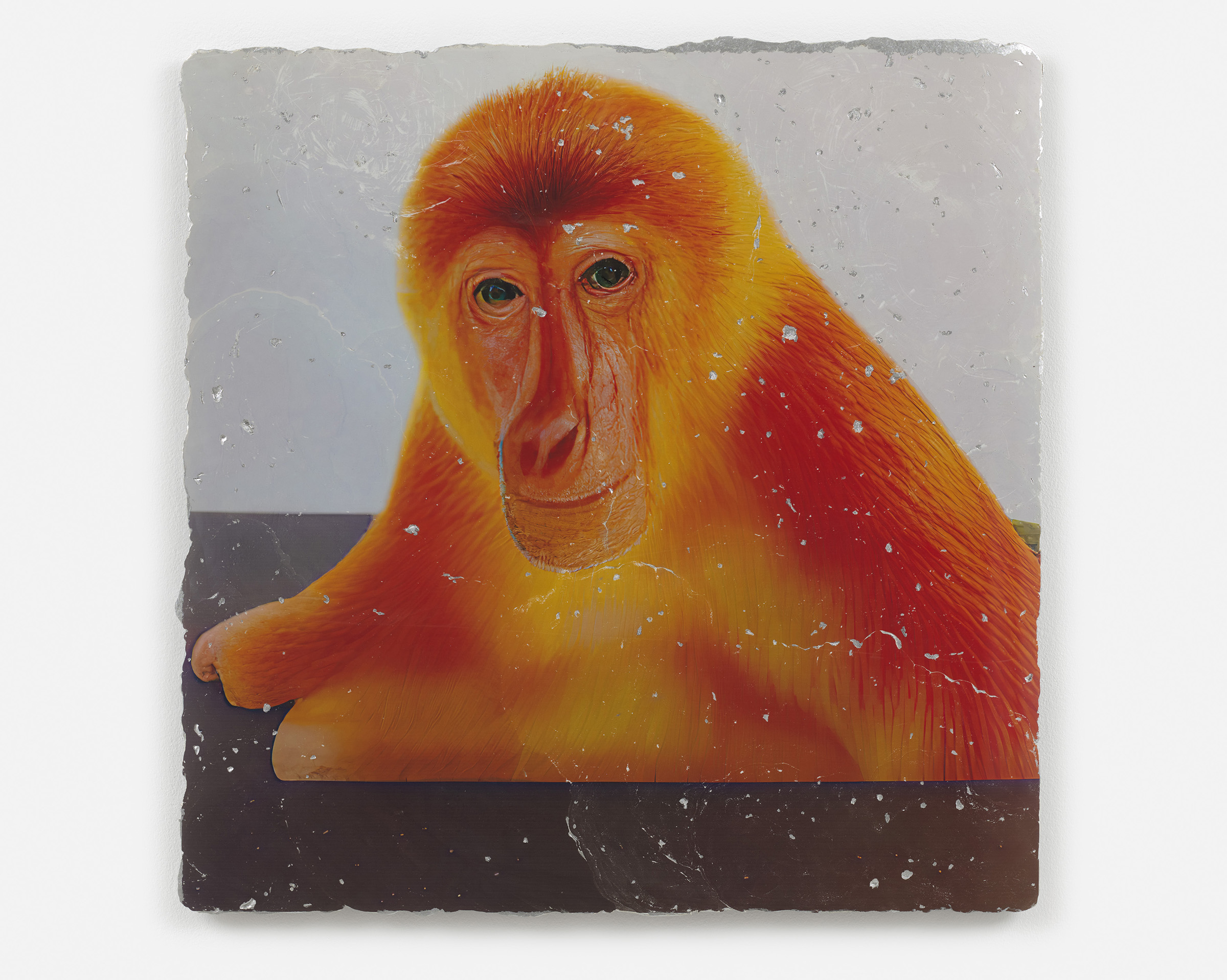
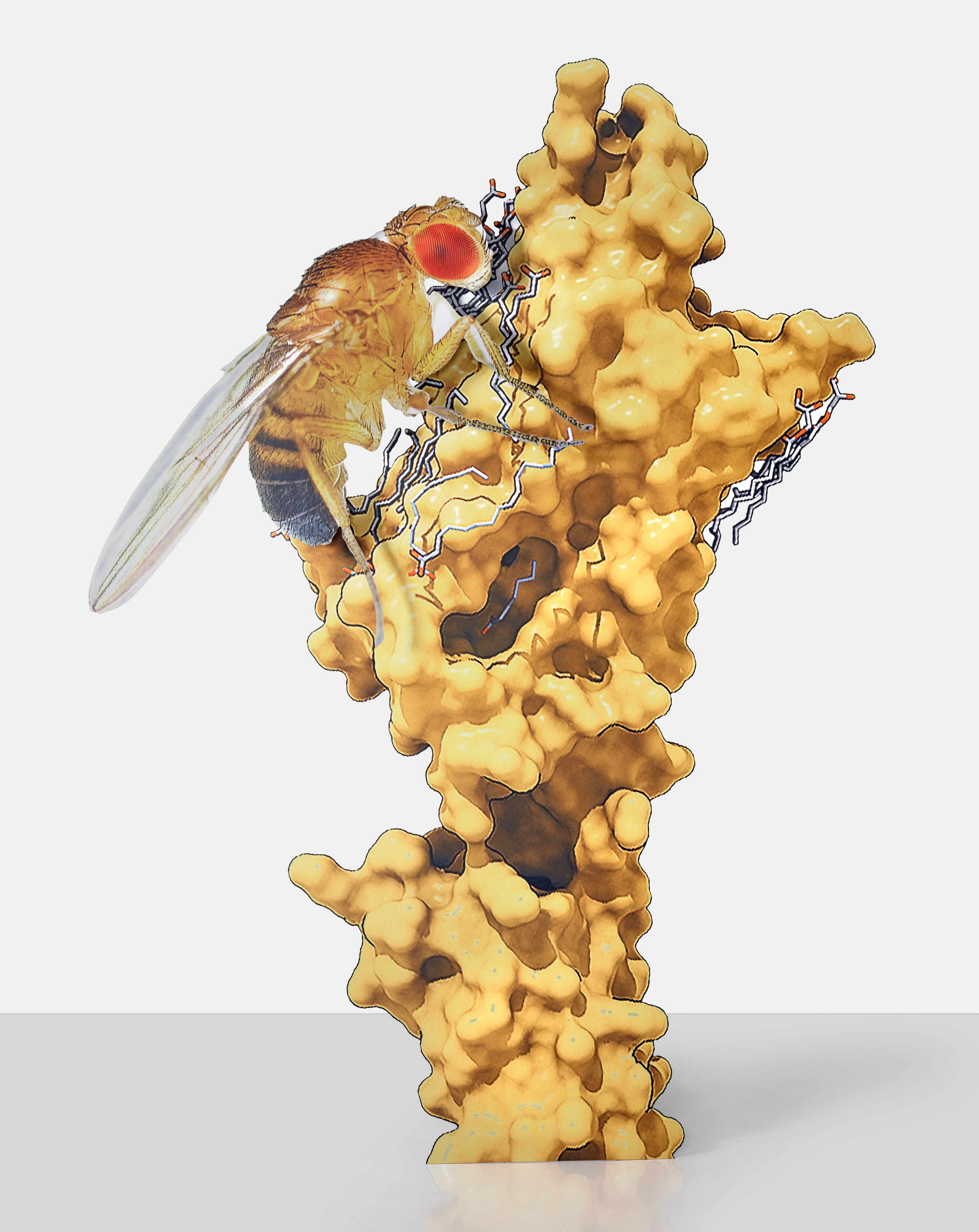
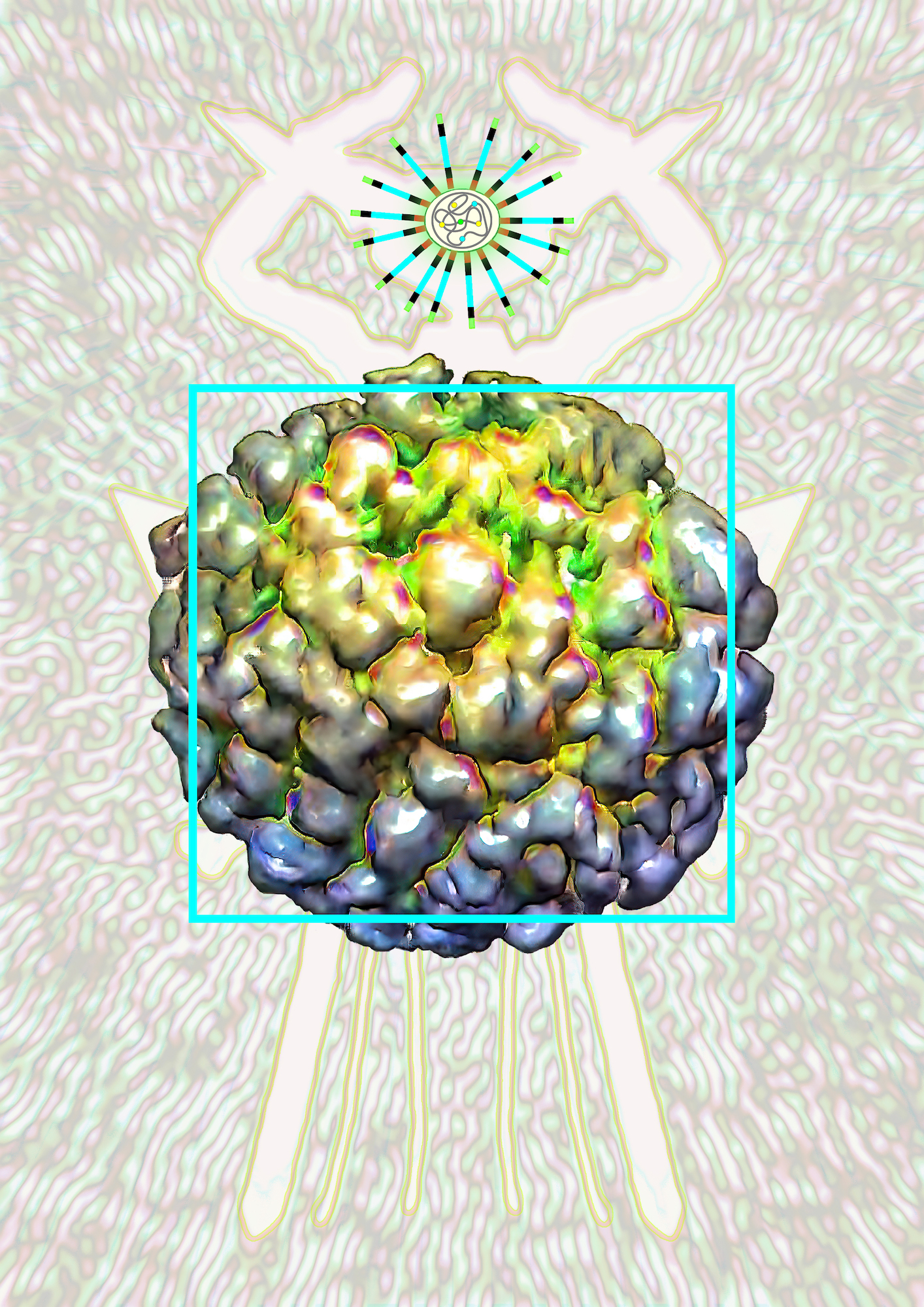
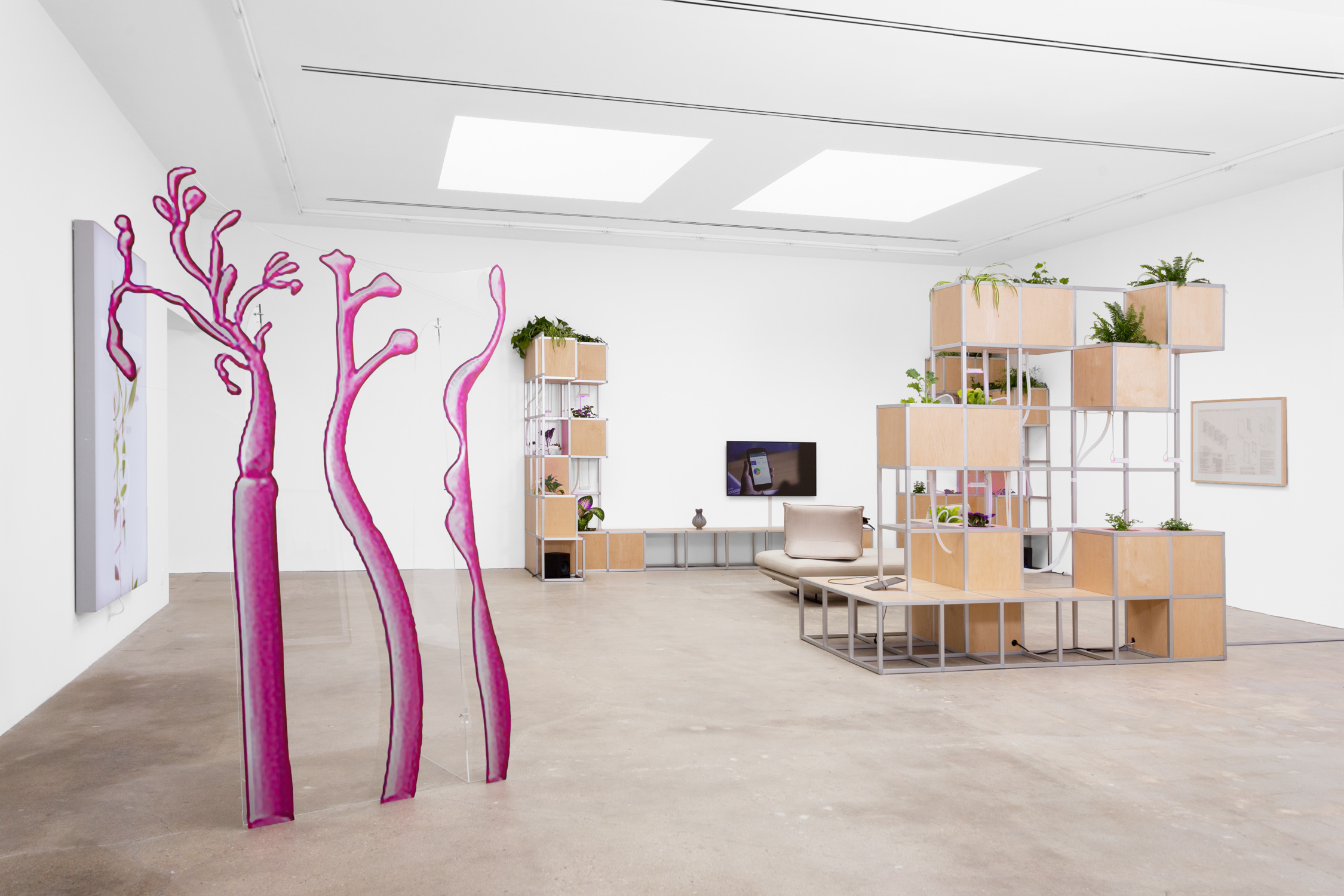
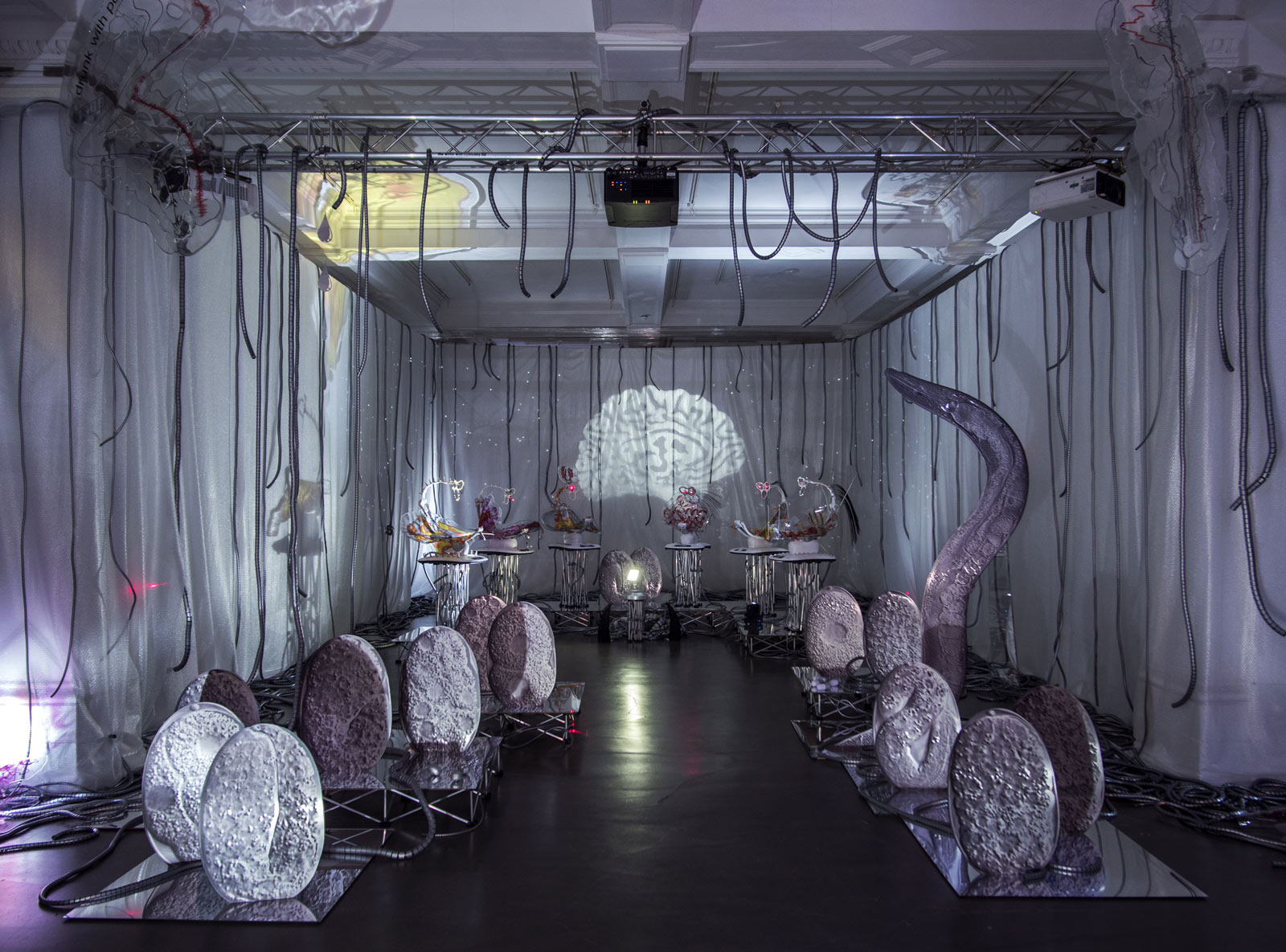
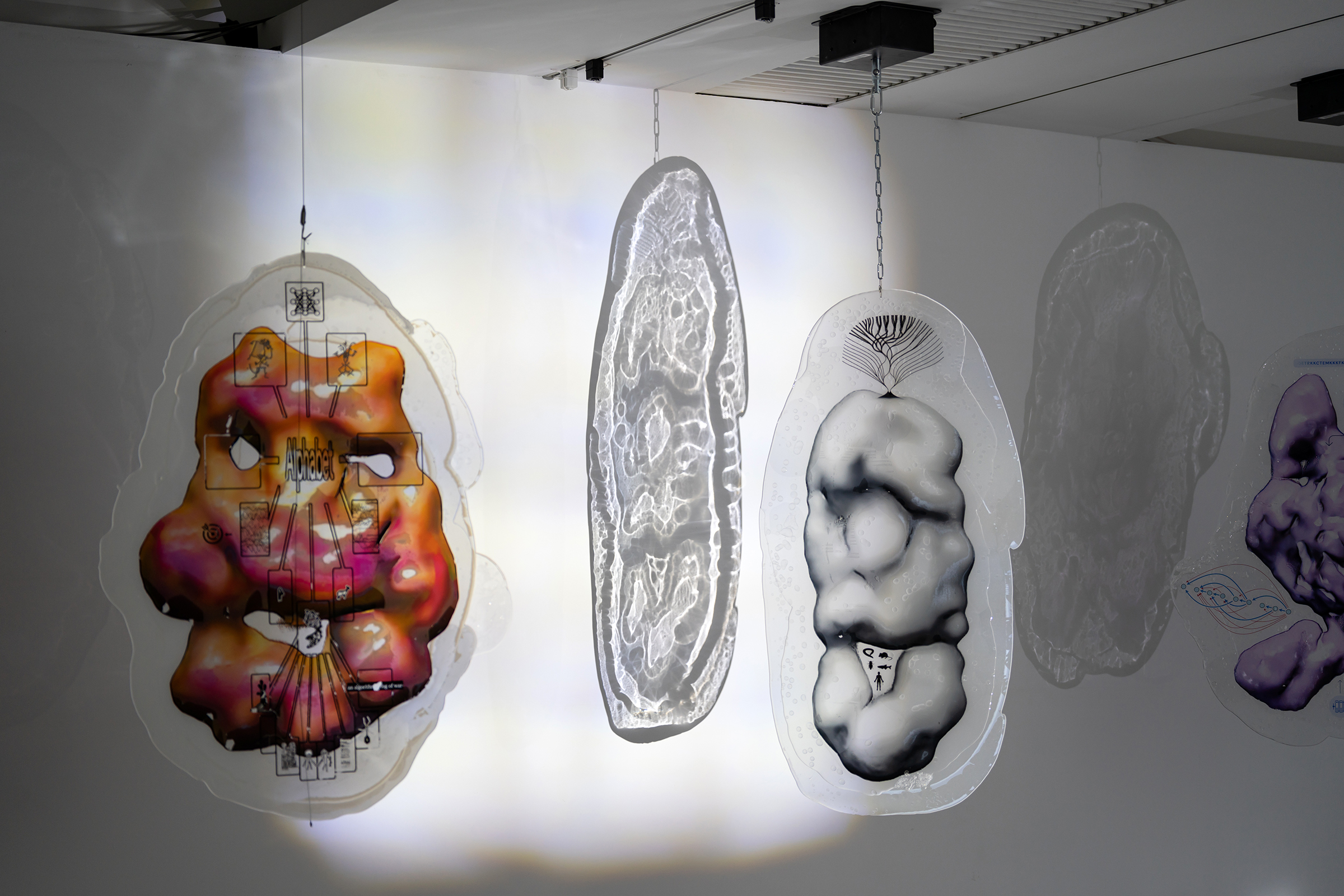
PDB Mutant (ATGC, green)
UV resistant digital print transfer on polyurethane resin, metal chain, rotating motor

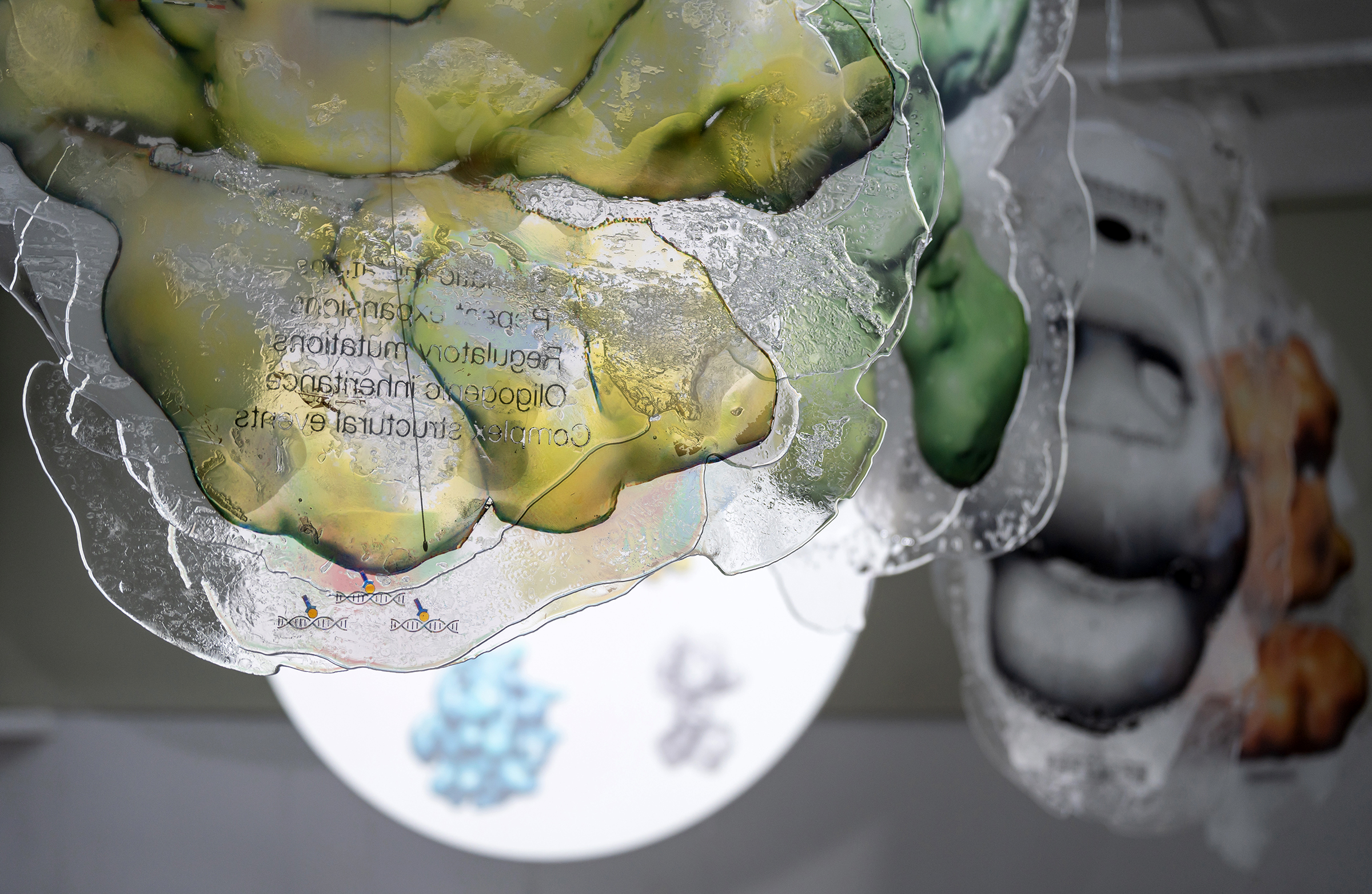
PDB Mutant (Regulatory Mutations, yellow), 2021
UV resistant digital print transfer on polyurethane resin, metal chain, rotating motor

PDB Mutant (Predictions, grey)
UV resistant digital print transfer on polyurethane resin, metal chain, rotating motor

PDB Mutant (Model Organisms, grey)
UV resistant digital print transfer on polyurethane resin, metal chain, rotating motor

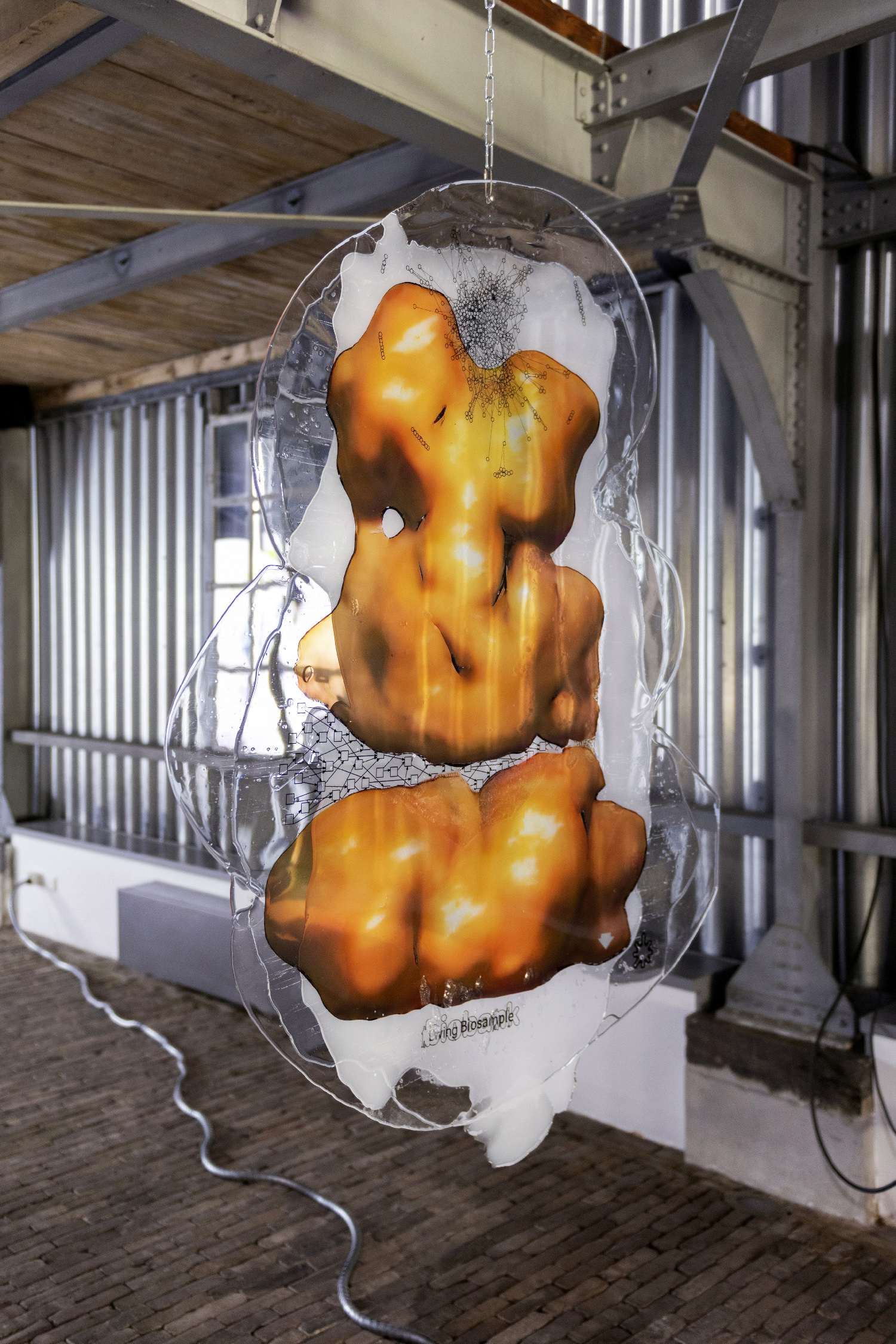
PDB Mutant (Living Biosample, orange)
UV resistant digital print transfer on polyurethane resin, metal chain, rotating motor
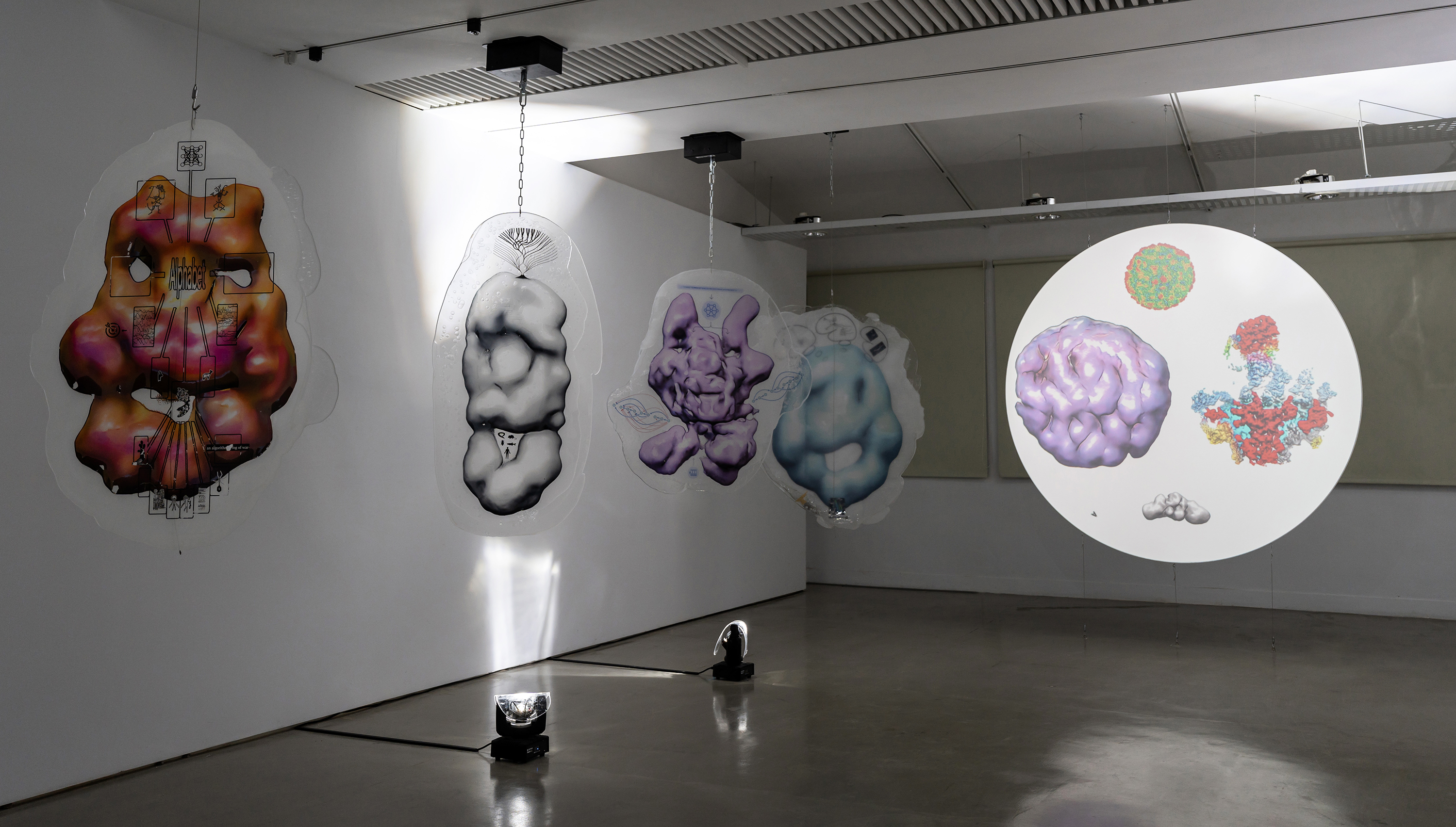
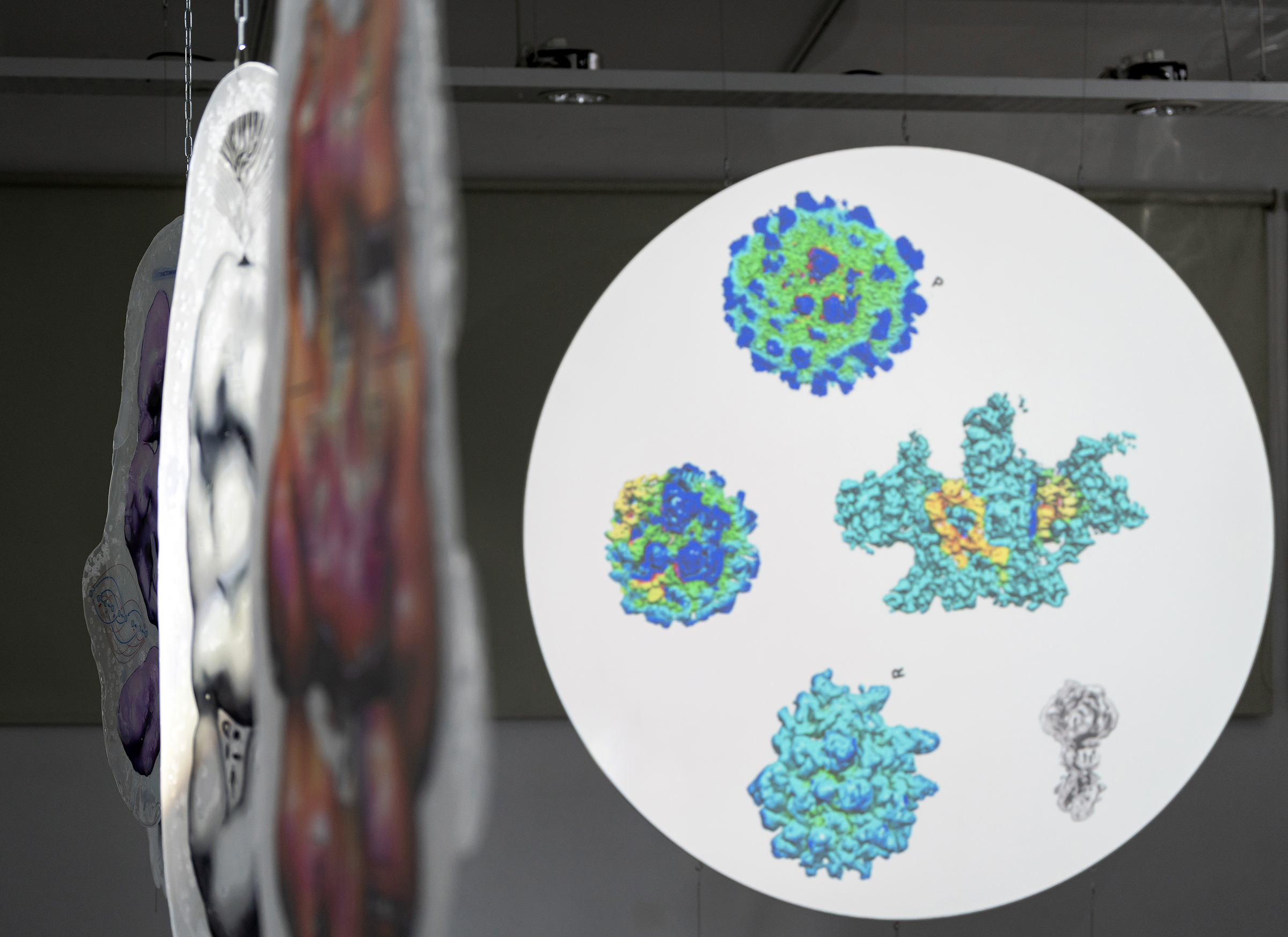
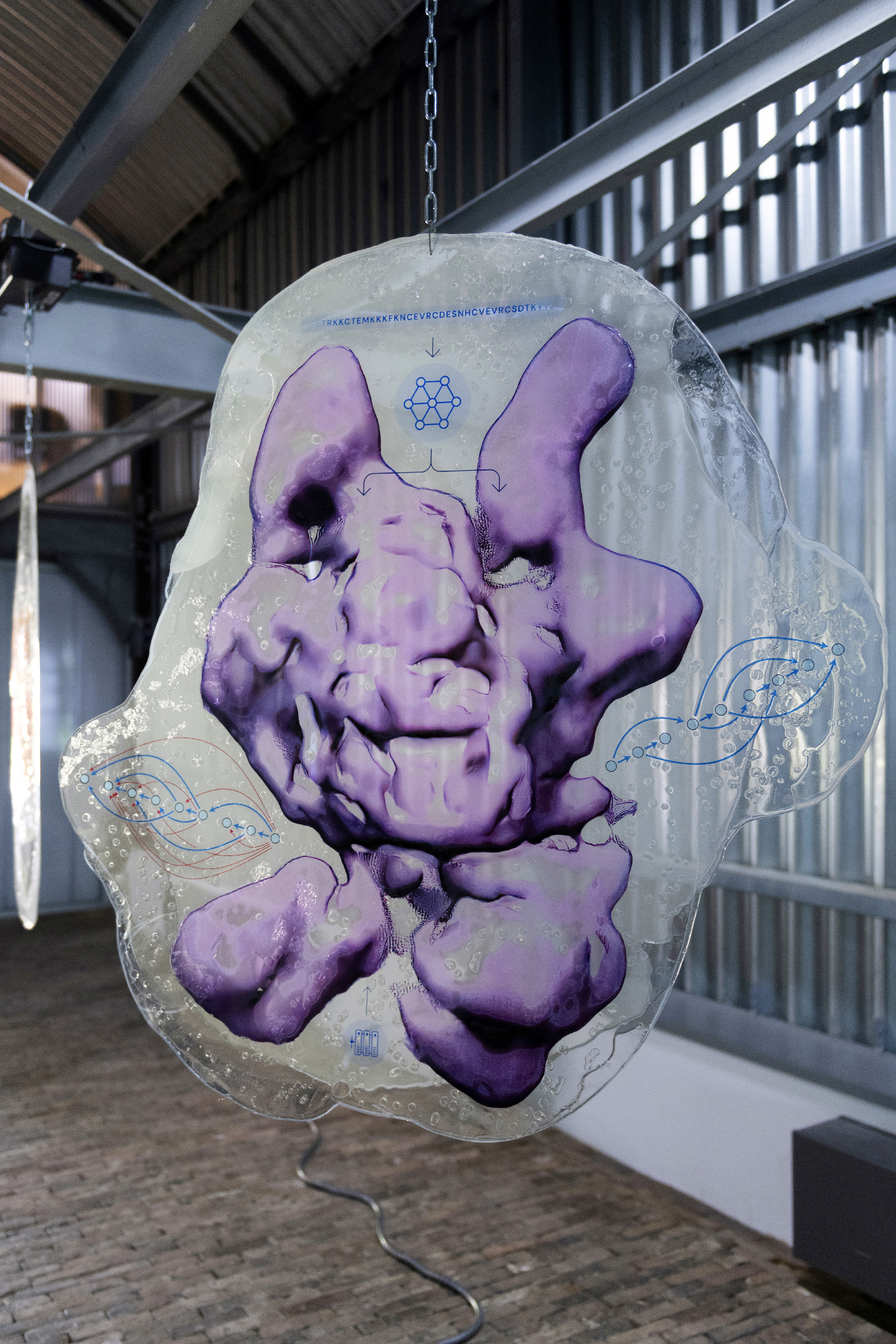
PDB Mutant (AlphaFold, purple)
UV resistant digital print transfer on polyurethane resin, metal chain, rotating motor
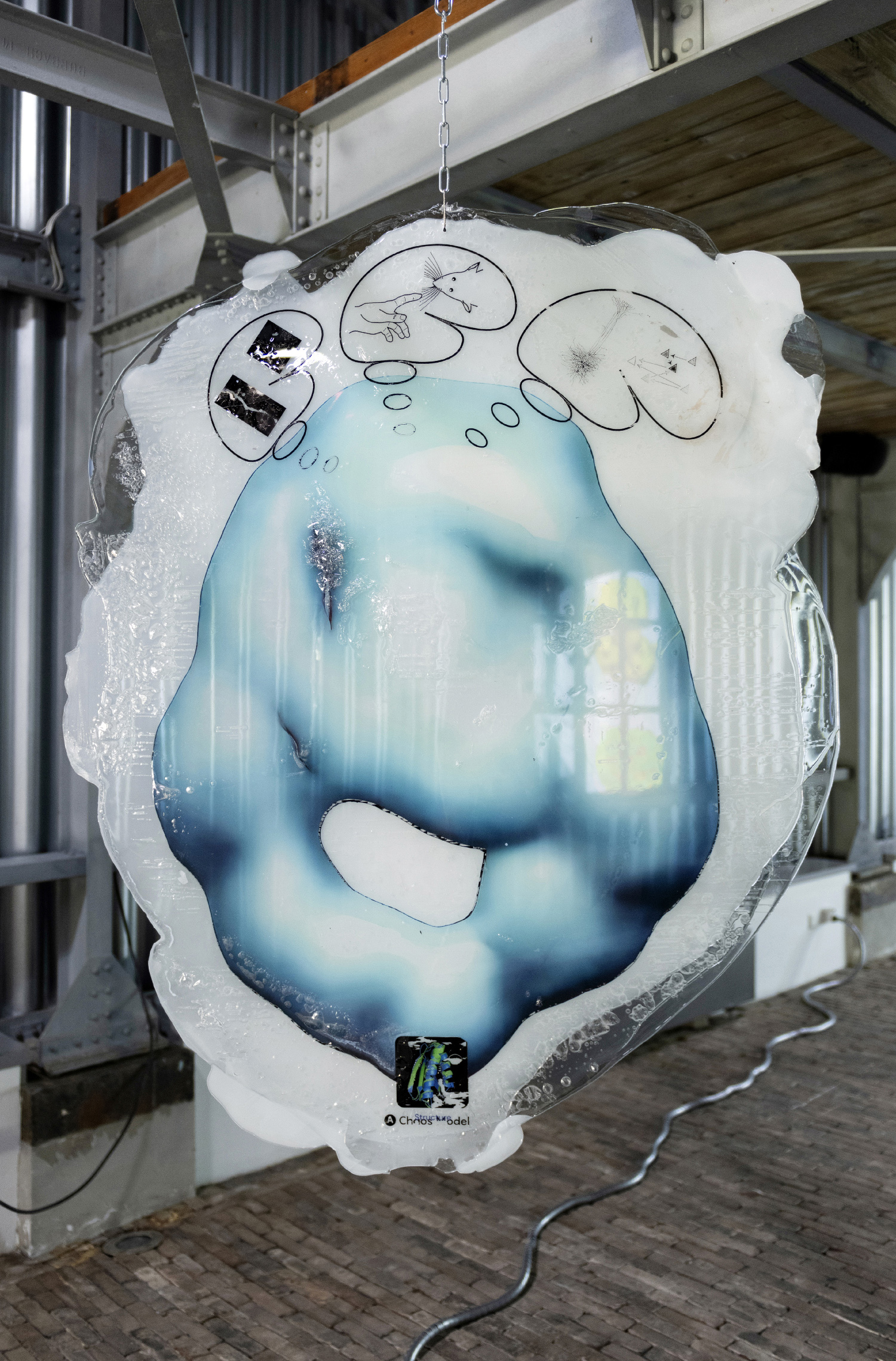
PDB Mutant (Labrats, blue)
UV resistant digital print transfer on polyurethane resin, metal chain, rotating motor
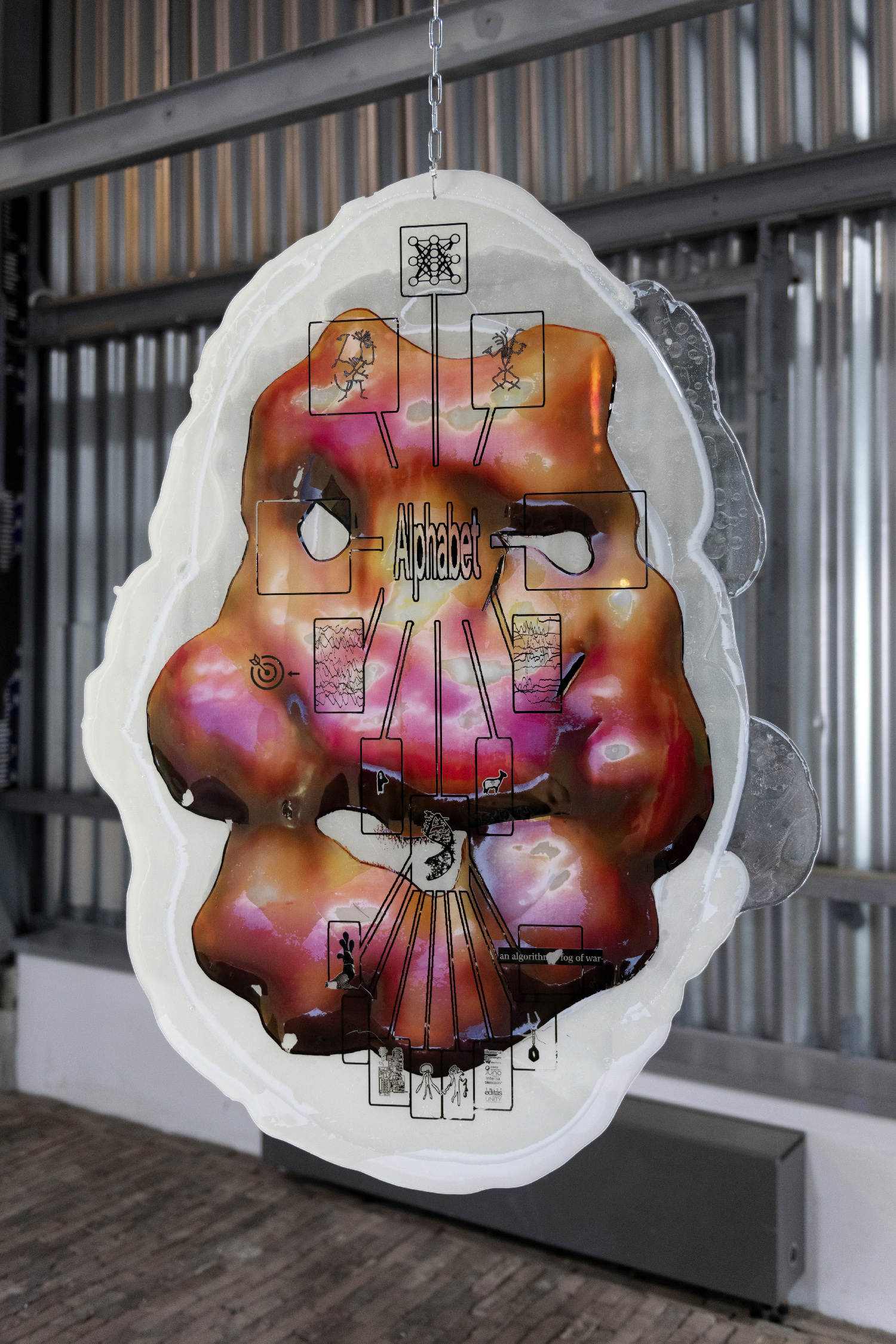
PDB Mutant (Alphabet, red)
UV resistant digital print transfer on polyurethane resin, metal chain, rotating motor